
When making a purchase at the grocery store, the gas pump, or online, have you ever wondered whether it’s safer to pay with a debit card or a credit card? Erica Stokes, Vice President and Information Security & Cybersecurity Officer at Bank of St. Francisville answers your questions.
Let’s start with the basics. What, fundamentally, is the difference between a debit card and a credit card?
Erica: A debit card is basically a monetary instrument that is best used for real-time spending—that is, money you already have. For making purchases using money that you do not currently have, but that you expect to have in the future, a credit card is best.
In addition, a credit card functions as a kind of financial insulator. Most major credit card issuers provide “zero-liability” policies that ensure you aren’t held responsible for unauthorized charges, as well as purchase protection programs that can cover the cost of an item if it is damaged or stolen shortly after you buy it. So, security-wise, it’s safer to use a credit card for certain kinds of purchases.
A credit card also has better security features. If something goes wrong with a product or service, such as being double-billed by a subscription service you already cancelled or receiving a high-end appliance that doesn’t work out of the box, often it's easier to deal in the credit realm than the debit realm. A debit payment is coming out of currency or funds you have in your account right now. There is a different retrieval process for that if something were to go wrong.
So, when should we use a debit card versus a credit card?
Erica: For long-term financial stability, it’s preferable to use a debit card. You’re spending money you already have, and it’s something you’re doing intentionally. You want to use a debit card for everyday purchases.
But if you’re buying something online, or if you’re signing up for a service—something that’s going to charge you on a regular basis—it’s safer to use a credit card. This is because online transactions carry a higher risk of data breaches; if a hacker intercepts a debit card number, they have a direct line to your checking account. With a credit card, you are spending the bank's money first, which provides a buffer that allows you to dispute a fraudulent charge before any of your personal cash is ever touched.
Let’s talk about using a card at the gas pump. Any suggestions?
Erica: There are a lot of misconceptions about using a card at the pump. It’s always best, and cheaper, to pay for gas with cash if you have it. You usually get a discount if you pay with cash. So, if you’re really looking at pinching pennies, you want to pay with cash. Even if that’s not a concern, a credit card is safer at the pump. Gas stations are prime targets for "skimmers"—hidden devices that steal your card info—and if your debit PIN is captured, a thief could potentially drain your checking account at an ATM before you even finish your commute. And you don’t have to worry about any holds.
Yes, let’s discuss holds. What is a gas hold? And can you fill us in on how to avoid them?
Erica: A lot of times gas stations will put a “pre-authorization hold”—I’ve seen as much as $300, especially when gas was really high a couple of years ago—on your debit card. That will hold those funds in your account until the pre-authorization drops, temporarily freezing your own grocery or rent money for 72 hours or longer depending on the merchant’s batch processing.
Choosing to run a debit card as a “credit” transaction can work at some pumps. When you just tap a debit card or slide your card in, you might be given the option to run it as “credit.” When you choose this option, the transaction is processed through a credit card network (like Visaor Mastercard) rather than the ATM/PIN network. This means you aren’t required to enter your PIN, and the merchant doesn’t get an immediate "real-time" authorization for the exact amount; instead, the transaction may take a day or two to officially clear your account.
Running the transaction as credit can help protect your PIN from skimmers, but it doesn’t always prevent a hold. Paying inside at the register is the only foolproof way to avoid one. Generally speaking, you want to use a credit card or cash at the pump—unless you know for a fact the gas station doesn’t do those pre-authorization holds.
How can Bank of St. Francisville’s mobile app help with card security?
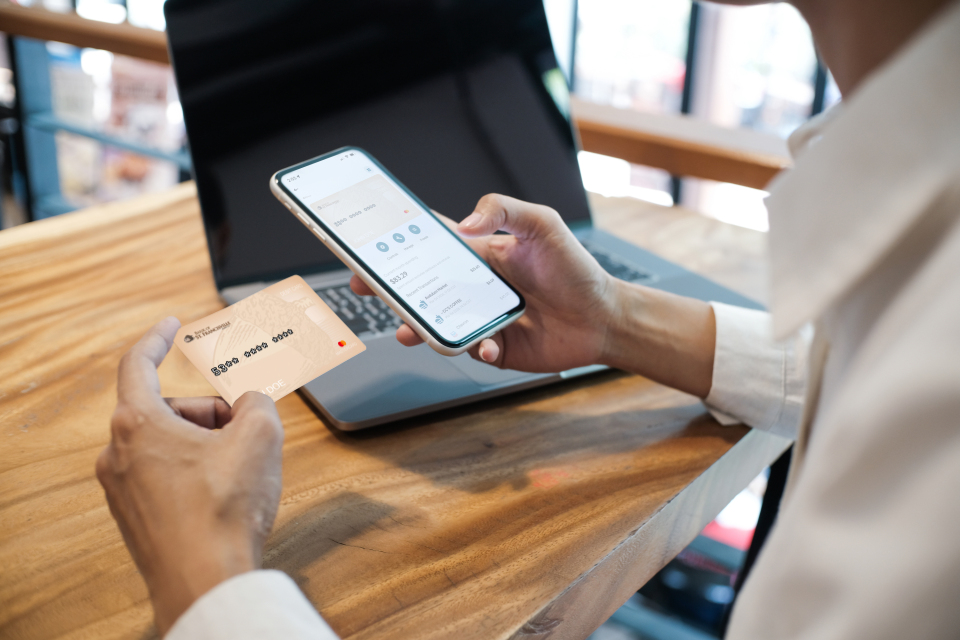
Erica: If you log into BSF’s mobile app, you can see and control any BSF-issued debit cards that have been set up in your account. If you get a new card, sometimes you’ll have to add that card manually, or alternatively a customer service representative can add it for you. Once a card is added, if you leave it at a restaurant or gas station, or your wallet or purse is lost or stolen, you can log in to the app and freeze the card. This gives you some options for securing your account to prevent unauthorized usage until you can get a replacement card.
Lunch & Learn: Common Frauds & Scams
On Wednesday, March 18, join BSF’s Financial Literacy team for Lunch &Learn: Common Frauds & Scams – an educational program to help community members avoid falling victim to financial scams. Noon–1pm at The Francis Southern Table. Lunch will be available for $20. Register by Friday, March 13 by clicking HERE.
To learn more about Bank of St. Francisville’s mobile app and begin managing your debit and credit cards, click HERE.

